KlaroNail Ingredients: A Closer Look at the Formula Behind Daily Nail Care
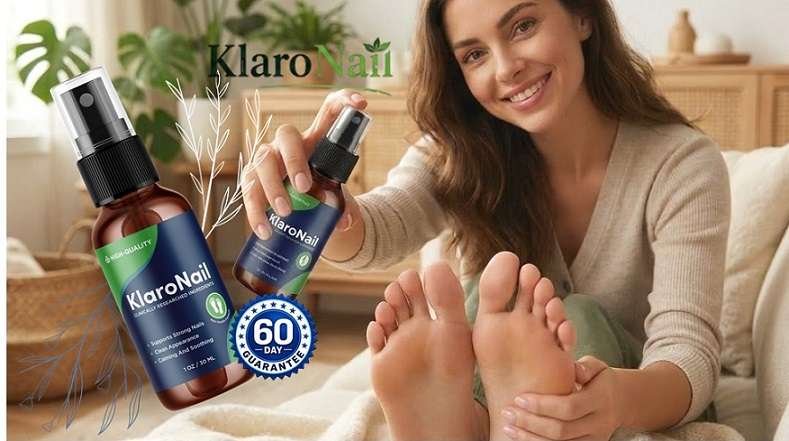
When choosing a topical nail-care product, the ingredient list can tell you a great deal about how the formula is designed and what role it may play in a daily routine. KlaroNail Ingredients combine a selected blend of botanical oils, plant-based components, and topical ingredients in a convenient spray designed for direct application to the nails, cuticles, and surrounding skin.
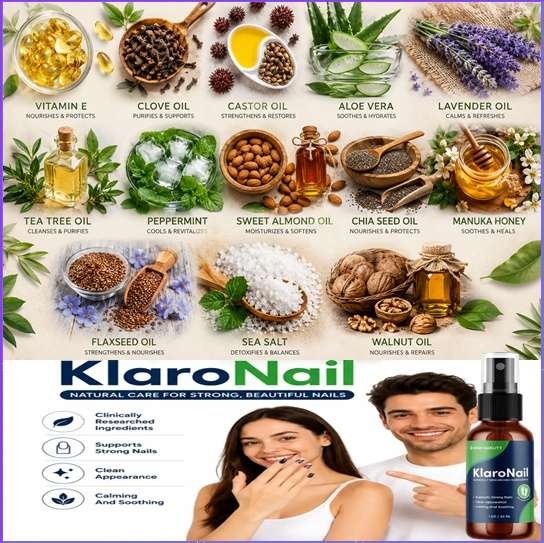
KlaroNail contains 13 listed ingredients, including 5% undecylenic acid USP, tea tree oil, clove bud oil, lavender oil, aloe vera, vitamin E, menthol, camphor oil, manuka honey, sweet almond oil, walnut oil, flaxseed oil, and chia seed oil.
Rather than relying on a single ingredient, KlaroNail brings these components together in one easy-to-use topical formula. The result is a practical approach to everyday nail care, especially for people who prefer a spray format that can be applied directly to the areas they want to care for.
It is important to distinguish ingredient research from product-specific clinical claims. Research on an individual ingredient does not automatically demonstrate that the finished KlaroNail formula produces the same effects. KlaroNail is presented here as a topical nail-care product intended for cosmetic and everyday care rather than as a product intended to diagnose, treat, cure, or prevent disease.
A Breakdown of Its Powerful Formula
The value of KlaroNail Ingredients comes from the variety of components included in the formula. Each ingredient contributes a different characteristic, allowing the product to combine botanical elements with targeted topical care.
Undecylenic Acid
Undecylenic acid is one of the key ingredients in KlaroNail, included at 5% USP according to the product information. It is an unsaturated fatty acid derived from castor oil and has a long history of use in topical products.
Scientific references describe undecylenic acid as an ingredient with antifungal properties, while the Cosmetic Ingredient Review has evaluated its safety for cosmetic use under specified conditions.
Within KlaroNail, it forms part of the formula’s targeted topical approach to nail and surrounding-skin care.
Tea Tree Oil
Tea tree oil adds a botanical component to the formula. It is widely used in topical products and has been studied for several skin-related applications.
The available scientific evidence is mixed depending on the intended use. NCCIH notes that only a small number of studies have examined tea tree oil specifically for fungal nail concerns, and the evidence is not sufficient to draw firm conclusions.
For KlaroNail, tea tree oil is best understood as one component of a broader botanical blend rather than as a stand-alone solution.
Clove Bud Oil and Lavender Oil
Clove bud oil and lavender oil contribute additional botanical elements to KlaroNail. Both fit naturally into a plant-focused topical formula and complement the other oils included in the ingredient blend.
Their inclusion helps give KlaroNail a broader ingredient profile rather than relying exclusively on one type of component.
Aloe Vera
Aloe vera is another familiar botanical ingredient used in topical personal-care products. In KlaroNail, it complements the formula’s focus on caring for the skin surrounding the nails.
Because nail care often includes attention to the cuticle and nearby skin, including aloe vera helps support the overall skin-care character of the formula.
Vitamin E
Vitamin E is included as part of KlaroNail’s ingredient blend and is widely associated with topical skin-care formulations.
Research has explored vitamin E’s role in dermatology and cosmetic formulations, including its interaction with the skin and potential barrier-related properties. However, researchers also note that controlled clinical evidence varies depending on the specific use and formulation.
In KlaroNail, vitamin E complements the formula’s focus on maintaining a well-cared-for appearance around the nails.
Botanical Oils and Additional Components
KlaroNail also contains sweet almond oil, walnut oil, flaxseed oil, chia seed oil, manuka honey, camphor oil, and menthol.
Together, these ingredients add further botanical and topical characteristics to the formula. Sweet almond, walnut, flaxseed, and chia seed oils provide plant-derived components, while manuka honey contributes another naturally inspired element.
Menthol adds a refreshing sensory quality, while camphor oil complements the formula’s topical character. Rather than presenting each ingredient as a separate treatment, KlaroNail brings them together as one convenient daily-care formula.
Benefits of KlaroNail Ingredients
The purpose of examining KlaroNail Ingredients is not simply to create a long ingredient list. It is to understand how the formula fits into a practical nail-care routine.
Supports a Consistent Nail-Care Routine
KlaroNail is designed for convenient topical use, making it simple to incorporate into regular nail and surrounding-skin care.
Helps Maintain a Well-Cared-For Appearance
The combination of botanical oils and topical ingredients is designed to support the appearance of cleaner, smoother, healthier-looking nails and cared-for surrounding skin.
Convenient Direct Application
The spray format allows the formula to be applied directly to the nail, cuticle, and surrounding skin without the heavier feel associated with some thicker topical products.
Combines Multiple Ingredient Types
Instead of focusing on one component, KlaroNail combines undecylenic acid with botanical oils, aloe vera, vitamin E, menthol, camphor oil, and other selected ingredients.
Designed for Everyday Topical Care
The formula is intended to fit naturally into a simple daily routine, making consistency easier for users who prefer straightforward topical nail care.
Scientific Research Supporting Ingredients
Looking at the science behind individual KlaroNail Ingredients adds useful context, but it is important not to confuse ingredient research with proof of the finished product’s effectiveness.
Undecylenic acid has been evaluated by the Cosmetic Ingredient Review, which concluded that it can be considered safe for cosmetic use under specified conditions when formulated appropriately. PubChem also identifies its established topical and chemical uses and documents its history as an ingredient associated with antifungal activity.
Tea tree oil has also received scientific attention. According to NCCIH, some topical research suggests potential usefulness for certain skin conditions, but evidence for fungal nail infections remains limited and insufficient for firm conclusions. NCCIH also notes that topical tea tree oil can cause irritation or redness in some individuals.
Vitamin E has been studied extensively in dermatology and cosmetic science. Reviews describe its biological activity in skin and its widespread use in cosmetic formulations, while also emphasizing that more controlled research is needed for specific clinical applications.
These findings help explain why certain ingredients are commonly found in topical personal-care formulas, but they should not be interpreted as clinical evidence that KlaroNail itself treats a medical condition.
How KlaroNail Stands Out
Many nail-care products focus heavily on a single ingredient or a very narrow approach. KlaroNail Ingredients take a broader route by combining a targeted topical component with a variety of botanical oils and skin-care ingredients.
The formula includes 5% undecylenic acid USP alongside tea tree oil, clove bud oil, lavender oil, aloe vera, vitamin E, manuka honey, and several plant oils. This creates a more comprehensive ingredient profile while keeping the product straightforward to apply.
Another distinguishing feature is the delivery format. KlaroNail comes as a fine topical spray, allowing users to apply the formula directly to the nail and surrounding area. This can make the product convenient for people who want a simple routine without complicated application steps.
The formula is also designed around consistency. Nail appearance naturally changes over time as nails grow, so maintaining a regular personal-care routine can be more practical than relying on occasional application.
Most importantly, KlaroNail should be viewed according to its intended positioning: a topical product for everyday nail and surrounding-skin care. Cosmetic claims should remain truthful and not imply disease treatment unless the product is legally marketed and supported for that purpose. FDA guidance specifically distinguishes cosmetic claims from claims to treat or prevent disease.
Conclusion
The KlaroNail Ingredients formula combines a diverse selection of topical and botanical components, including 5% undecylenic acid USP, tea tree oil, clove bud oil, lavender oil, aloe vera, vitamin E, menthol, camphor oil, manuka honey, sweet almond oil, walnut oil, flaxseed oil, and chia seed oil.
What makes the formula interesting is not simply the number of ingredients, but the way different ingredient categories are brought together in one convenient spray. Botanical oils complement the topical formula, while ingredients such as aloe vera and vitamin E contribute to its broader nail and surrounding-skin care approach.
Scientific research provides useful background on individual ingredients such as undecylenic acid, tea tree oil, and vitamin E, although ingredient-level evidence should not be presented as proof of specific results from the finished KlaroNail product.
For consumers looking for a convenient addition to their daily nail-care routine, KlaroNail offers a straightforward topical format and a carefully selected ingredient blend. As with any topical product, users should follow the product directions and discontinue use if irritation occurs.
💅 Refresh Your Daily Nail-Care Routine
Try KlaroNail for $49 per bottle, with convenient topical application and a 60-Day Money-Back Guarantee.